Free Quotes from Vetted Local Installers
Answer three short questions and get matched with one vetted local installer for a free, no obligation quote.
What Happens Next
Most people who have looked into solar already know how this usually goes. You fill in one form, and for the next fortnight your phone rings with companies you have never heard of, each one working from the same set of details, each one wanting to book a survey before you have decided anything.
That is not what happens here.
Your details go to one vetted installer covering your Leeds postcode. One company, contacting you once, to arrange a free quote. Your details are not sold on and they are not circulated to a list of companies competing for the job.
Solar Panels Leeds is an introduction service. The installation contract, if you decide to go ahead, is between you and the installer.

The Return
On 1 October the price cap rose by 4%, and the electricity unit rate for a household on a standard variable tariff paying by Direct Debit now sits at 26.32p per kWh. Every unit a roof generates and the house uses is a unit at that price not bought.
For a 4.5 kW system without battery storage, the size Energy Saving Trust gives as typical for a UK home, here is how the annual benefit breaks down.
Two separate things are happening, and they are not worth the same. Electricity you generate and use in the house is electricity you do not buy, so it is worth the full rate you would otherwise have paid. Electricity you export is sold back at a much lower rate. That gap is the reason using your own generation matters more than exporting it, and the reason battery storage changes the arithmetic.
Around half the electricity generated is used directly in the home, roughly 1,913 kWh, replacing units that would otherwise cost 26.32p each.
The remaining 1,913 kWh goes back to the grid under the Smart Export Guarantee, at an assumed tariff of 10.8p per kWh.
Bill savings and export income combined, for a 4.5 kW system.
Based on a 4.5 kW system producing around 4,500 kWh under standard test conditions, derated to roughly 3,825 kWh to reflect real world conditions. The import rate is the electricity unit rate in the Ofgem price cap for 1 October to 31 December 2026. It carries no VAT, because the government removed VAT from electricity bills for the period 1 October 2026 to 31 March 2027. Ofgem notes that costs in this period cannot be compared directly with previous periods for that reason. The export rate is a conservative assumption within the range of Smart Export Guarantee tariffs available, which runs from around 3p to 25p per kWh depending on supplier. Your own savings will vary with your electricity rate, the export tariff you secure, your usage pattern and the sunlight at your location.
The Cost, 2026
There is no single price for a solar installation. Cost depends on the size of the system, how difficult the roof is to access, whether panels sit on the roof or are integrated into it, and whether the roof covering needs work first.
Government figures give a starting point. The Department for Energy Security and Net Zero publishes the cost of every MCS certified installation in the UK. For domestic installations in the 2025/26 financial year:
Smaller systems cost more per kW because scaffolding, labour, certification and the grid application cost roughly the same whether six panels go up or sixteen.
The band most domestic installations fall into, covering roughly ten to twenty four panels depending on panel output.
Energy Saving Trust puts the same system at around £7,600, arrived at independently.
Costs are falling. The average domestic cost per kW dropped from £1,844 in 2024/25 to £1,772 in 2025/26.
These figures cover panels, inverter, installation and grid connection. They do not include battery storage, which Energy Saving Trust puts at £5,000 to £8,000 on top.
Domestic solar installations currently carry 0% VAT. That relief is legislated to end on 31 March 2027, after which the rate returns to 5%. On a £7,400 system that is around £370, and it applies to the whole installed package including labour and scaffolding, not only the equipment.
The same date ends the removal of VAT from electricity bills. Both changes land on 1 April 2027.
Installations booked close to the deadline are at the mercy of survey dates, scaffolding availability and grid connection timing, none of which move quickly in the first quarter of the year.
Cost figures from DESNZ Solar PV cost data, 2025/26 financial year, drawn from the MCS Installation Database, published 28 May 2026. Average system size and battery costs from Energy Saving Trust. VAT treatment from HMRC VAT Notice 708/6. Your own quote will differ.
The Process
Three short questions, around 60 seconds. No account to create, nothing to upload, no survey to book.
Your details go to a single vetted installer covering your Leeds postcode.
The quote comes directly from the installer and is specific to your roof. There is no cost and no obligation to proceed.
Who You Are Matched With
The thing that matters most about the installer you are matched with is MCS certification. The Microgeneration Certification Scheme is the UK standard for small scale renewable installations, and it is not administrative box ticking. Without an MCS certificate you cannot register for the Smart Export Guarantee, so you are never paid for the electricity you export. Most manufacturer warranties on panels and inverters depend on certified installation. And the certificate is the evidence the work met the scheme's technical standard, which is exactly what a buyer's solicitor asks for when you come to sell.
Working locally matters for a more practical reason. A stone through terrace on a street with no off road parking is a different scaffolding job from a semi in Horsforth with side access, and Leeds has plenty of both. A company that works these streets every week prices that accurately instead of guessing at it.
The Checks
One installer covers Leeds at any time. They are checked against a fixed set of standards before any enquiry is passed on.
Before You Enquire
Leeds housing runs from back to back and through terraces in the inner suburbs, to interwar semis further out, to larger stone properties north of the ring road. Roofs here are often smaller, steeper and more overlooked than the detached homes used in most solar advertising, and a good number are stone with slate. Three questions come up more than any others.
Energy Saving Trust puts a 4.5 kW system at around twelve panels covering 20 to 30 square metres. A typical semi has room. A narrow terrace may not, in which case a smaller system still works, it simply generates less. There is no minimum size.
No. South facing gives the highest yield, but east or west facing roofs produce around 15 to 20% less, which is a reduction rather than a barrier. North facing roofs are not recommended.
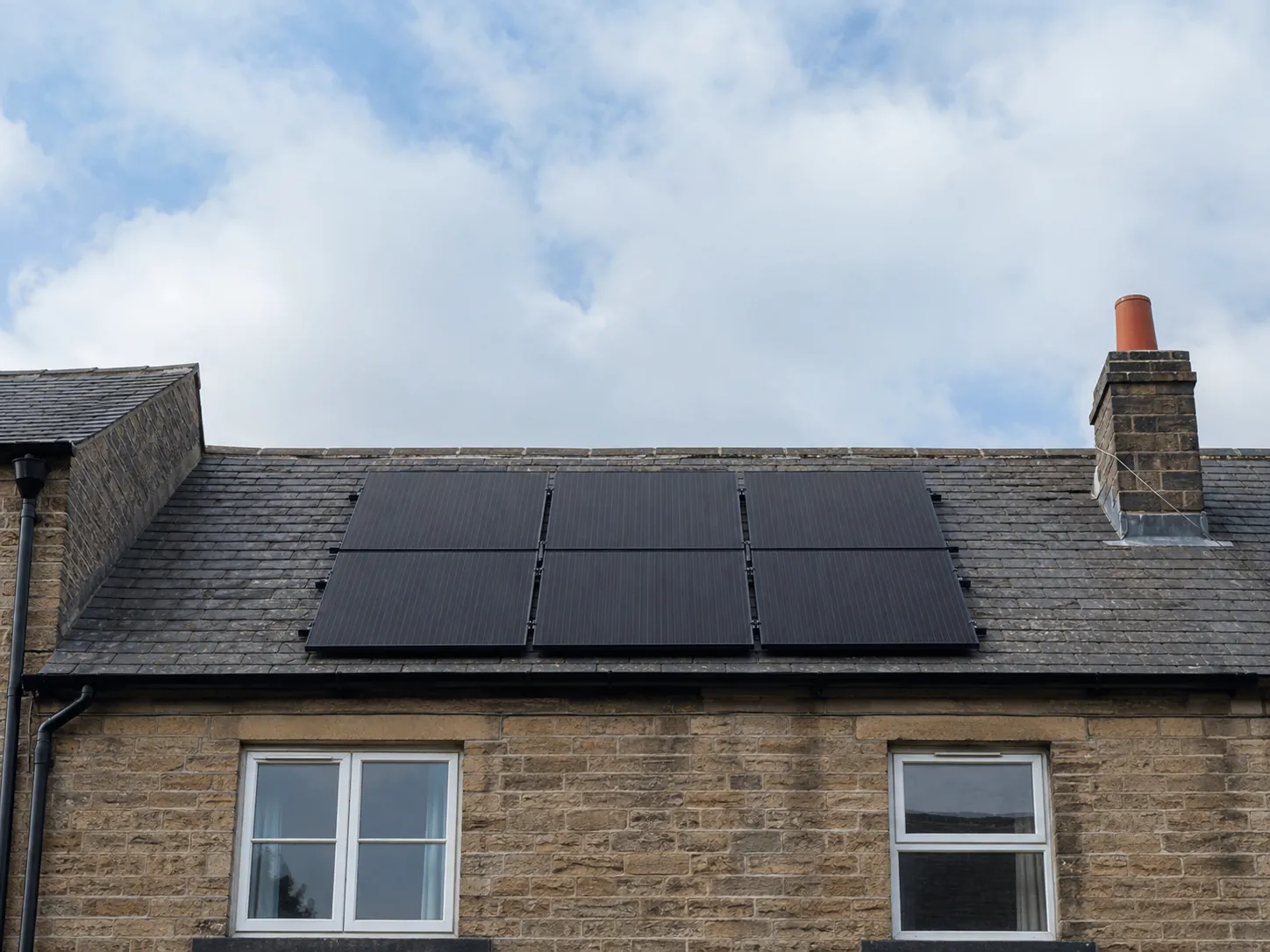
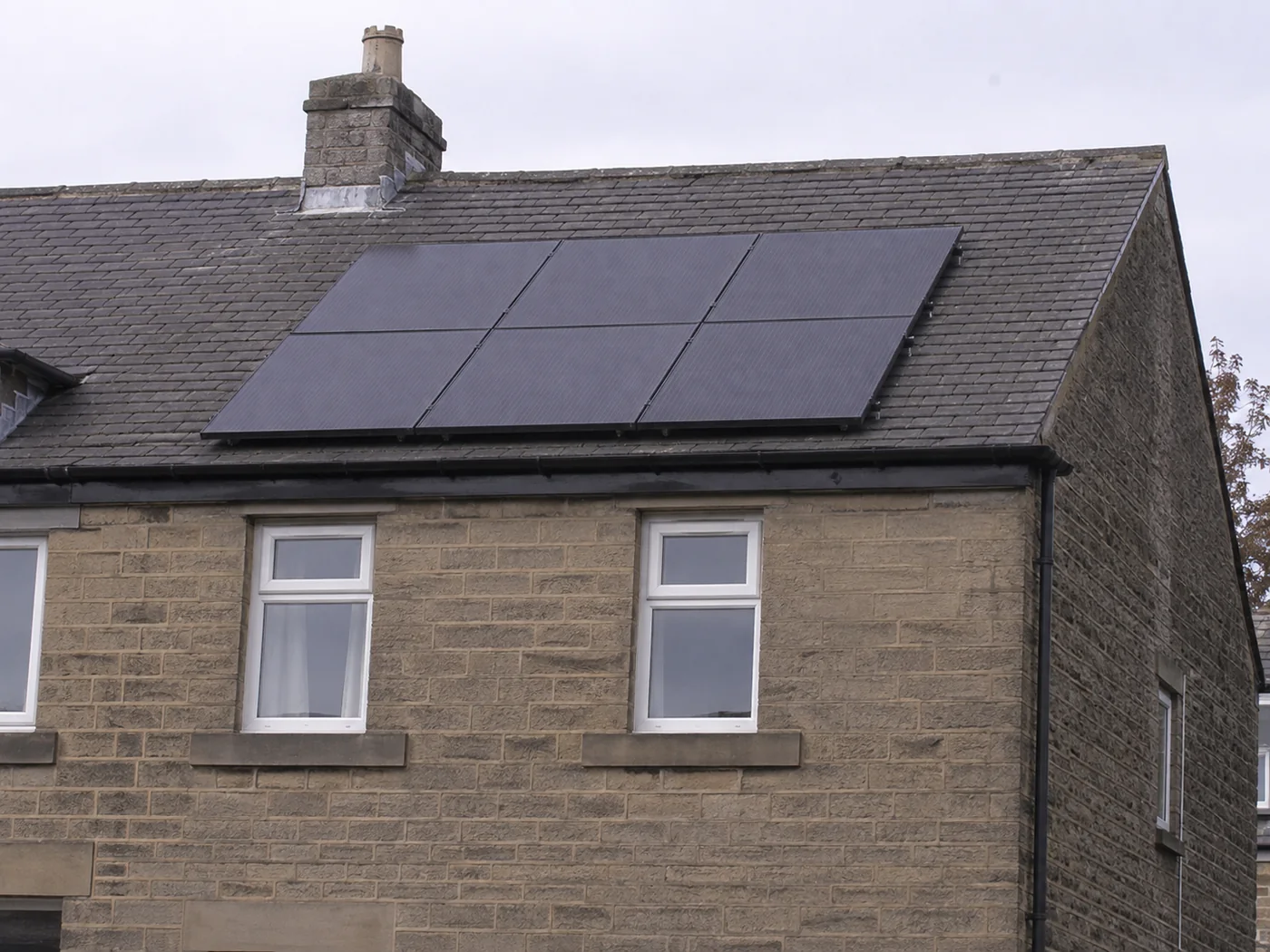
Slate and stone roofs are entirely workable. They take longer, because flashings are cut to suit the covering rather than dropped in, and that shows up in the quote as labour rather than as a problem. Shading matters more than orientation on tighter streets. Chimneys, neighbouring properties and trees all cast shade at different times of day. Optimisers reduce the impact by letting each panel perform independently, so one shaded panel does not drag down the rest. The installer carries out a shade assessment as part of the quote.
What Happens On The Day
Most domestic installations are finished within a day or two. The work follows the same four stages whatever the property, though a stone terrace with no off road parking takes longer to scaffold than a semi with side access.
Nothing here happens until you have had the quote and decided to go ahead.
The installer surveys the roof condition and covering, then sets up scaffolding suited to the property and the street.
Selected slates or tiles are lifted so hooks can be fixed into the rafters, then replaced with waterproof flashing, cut to suit the covering where the roof is slate or stone. Rails go on, then the panels.
Panels connect to the inverter and the inverter to the property supply. Isolators and an Ofgem approved generation meter are fitted, and the installer coordinates grid connection with the local Distribution Network Operator.
Safety and performance testing, documentation and warranties handed over, and the system registered with the Microgeneration Certification Scheme.
Storing What You Generate
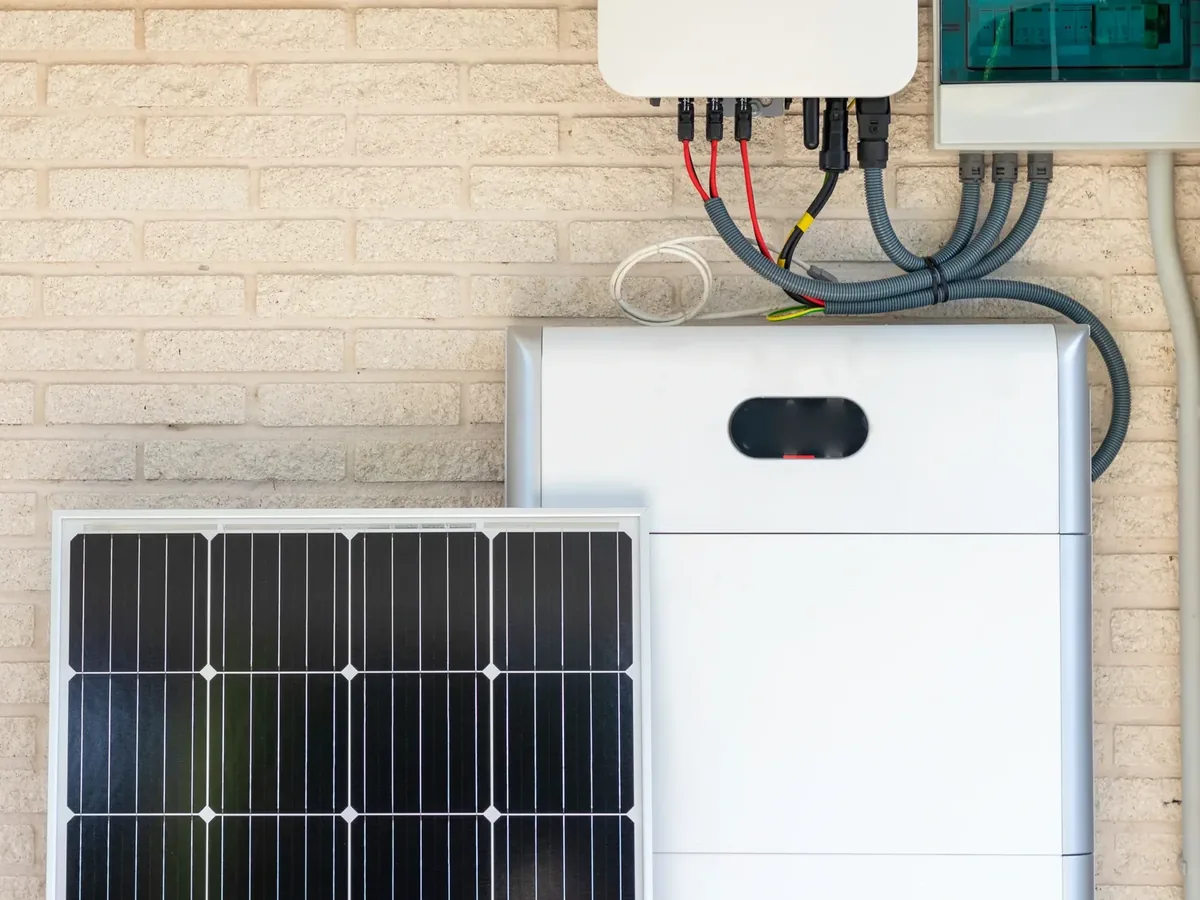
Without a battery, roughly half of what a system generates is used in the house and the rest goes to the grid. A battery stores that surplus so more of it is used rather than sold. Given the figures above, a unit you keep is worth 26.32p and a unit you export is worth around 10.8p, which is the whole argument for storage in one line.
Energy Saving Trust puts battery storage at £5,000 to £8,000 on top of the panel installation. Whether that pays back depends on how much electricity you use and when you use it, which is something the installer works through with you rather than something a website can answer.
A battery can usually be added later where a hybrid inverter was fitted at the outset, since that type is designed to accept storage afterwards without replacing the inverter. If you already have panels and are looking at a retrofit, that is worth saying when you enquire.
The Quote
The quote is free and carries no obligation. It comes directly from the installer, and it is specific to your roof rather than a figure off a price list.
A quote worth comparing sets out the system size in kW and the number of panels, the panel and inverter makes and models, whether the panels sit on the roof or are integrated into it, the scaffolding and access arrangements, the grid connection application, and a total price with MCS registration included. Ask for it itemised. A single number with no breakdown is very difficult to compare against anything else.
Two things worth checking against the figures further up this page. A price per kW well outside the DESNZ range needs explaining, and the explanation may be perfectly good, a difficult roof or a premium panel. And the quote should show 0% VAT, because a domestic installation supplied and fitted by one company is zero rated until 31 March 2027. If VAT appears on it, ask why.
Most enquiries are contacted within one working day.
Nothing is booked and no survey is arranged unless you ask for one.
Before You Enquire
Yes. There is no charge for the quote and no obligation to proceed after receiving it.
One. Your details are passed to a single vetted local installer covering your postcode, who contacts you directly to arrange the quote.
Because it is all that is needed to confirm the installer covers you. The full address is taken by the installer when they call, at the point it actually matters, rather than by a form before you have spoken to anyone.
In the large majority of cases, no. Solar panels on houses are usually permitted development.
Permission may be needed if panels protrude more than 200mm from the roof or wall surface and extend above the highest part of the roof, excluding the chimney. Properties in conservation areas and listed buildings require prior consent, which is worth checking given how much of Leeds sits in one or the other. Flats and apartments may also need permission where panels would sit on shared property. Leeds City Council is the authority to check with.
Energy Saving Trust puts a 4.5 kW system at around 20 to 30 square metres, using roughly twelve panels. Smaller roofs take smaller systems, which generate less but still work.
No. A south facing roof gives the highest annual yield, but east and west facing roofs produce around 15 to 20% less. Pitch and shading usually matter more than orientation, and the installer carries out a shade assessment as part of the quote.
No. It takes longer than concrete tile, because flashings are cut to suit the covering, and that shows in the quote as additional labour. It is common work in Leeds.
For domestic properties the work is usually completed within a day or two. This covers mounting the panels, fitting the inverter and connecting the system to the property's electrical network.
Most enquiries are contacted within one working day.
The relief is legislated to run until 31 March 2027. From 1 April 2027 the rate returns to 5%, which on a £7,400 system is around £370. Government policy can change, and this is the position as it currently stands.
In many cases yes, particularly where a hybrid inverter was fitted, which is designed to support battery storage being added afterwards without replacing the inverter. Whether that suits your property is something the installer confirms as part of the quote. There is more on battery storage here.
They are passed to one local installer so they can prepare your quote. ReachAI Ltd is registered with the Information Commissioner's Office under reference ZB828222. Full detail is in the privacy policy.
Around 60 seconds to complete. No cost, no obligation, and only one local installer will contact you.
Start My Free Quote